The following article was authored by Jordan Forbis, NC A&T State University Extension Summer Intern with the Orange County Center
How to Protect Nocturnal Pollinators From Light Pollution in Your Community

Growing up in a rural neighborhood in Graham, seeing the stars at night was always a given for me. I was far enough removed from any major cities that I was able to look up and see so many stars that I could almost make out the Milky Way. When I moved to Chapel Hill in 2018, I was disappointed to see that many of my familiar stars were no longer visible. This experience may be familiar to many, and you may even recognize it as a result of light pollution. What you may not know is that the effects of light pollution go far beyond blotting out the stars’ light from the night sky. In this article, I will discuss what light pollution is, how it affects nocturnal pollinators, and ways you can mitigate the effects of light pollution in your yard, neighborhood, and community at large.
What is light pollution?
Light pollution can be broken into 3 different categories, which the National Park Service defines: glare, light trespass, and skyglow. Glare is light that interferes with vision. Light trespass occurs when artificial light is unintentionally spread outside the intended property and space. Lastly, skyglow occurs when human-caused light scatters in the atmosphere and brightens the night sky. This is the type of light pollution that blocks my view of the stars in Chapel Hill.How does it affect nighttime pollinators?
Like humans, animals have a circadian rhythm. Natural light regulates this 24-hour sleep-wake cycle, along with hibernation and migration patterns (Gilkeson 2023). Light pollution disrupts these cycles, and can even change the sleep and activity patterns of plants and animals.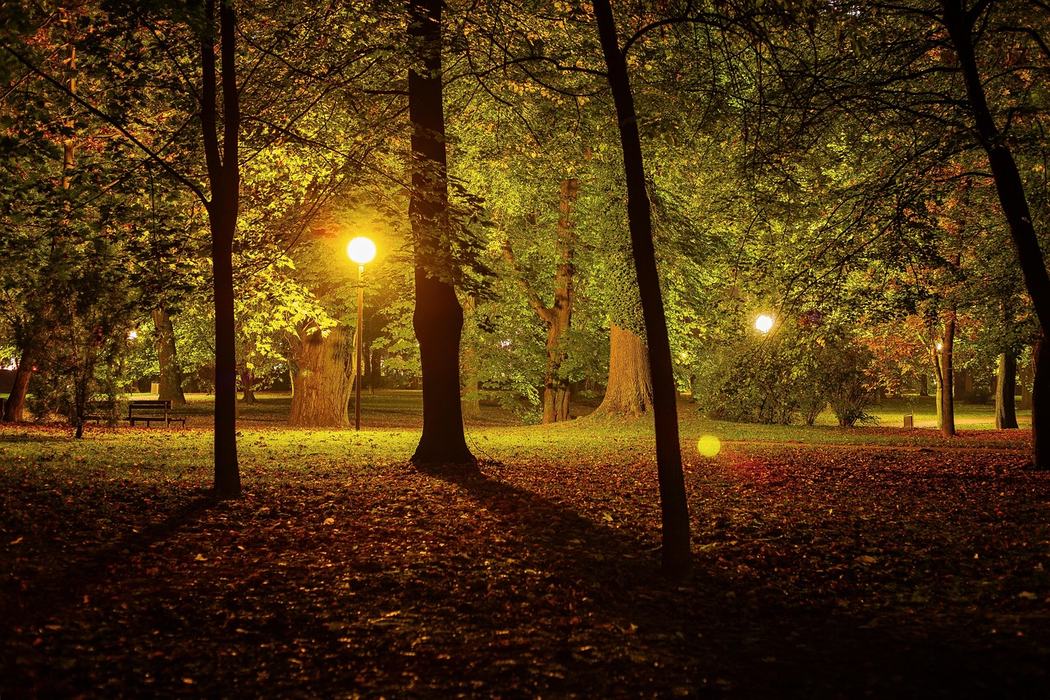
This artificial light “alters plant physiology, as well as pollinator perception and behavior, producing measurable—albeit variable—outcomes for plant reproduction” (Youngsteadt and Keighron 2023).
In North Carolina, fireflies are always a welcome visitor on warm summer evenings. Much like nocturnal pollinators, their nightly routines are likely disrupted by light pollution. They are observed to avoid bright ambient lights, including nights when the moon is full. It is also believed that bright artificial light can hinder fireflies’ ability to signal and communicate with each other, potentially disrupting mating (Firefly Conservation and Research). This results in fewer fireflies reproducing each year.How to mitigate light pollution and protect nighttime pollinators
If you want to help our nighttime neighbors, there are a few key things you can do. Firefly Conservation and Research explains a simple solution: keep external light off at night when you are not outside. If you do need to have lights on, make them motion-activated or put them on a timer so they are off when not in use. Along with this, closing blinds and curtains can help limit the amount of light that escapes your house after dark.If you are willing and able, another course of action is to plant a moon garden. These gardens are designed to be welcoming to nocturnal pollinators, particularly moths (Conserving Carolina). These creatures are important, not just as pollinators, but also in supporting a healthy ecosystem for birds and bats (Brenner 2018). The caterpillars of moths are essential to birds during the breeding season, as they are a primary part of the insect diet that 96% of terrestrial birds rely on to rear their chicks (Brenner 2018). Brenner also points out that it takes between 6,000-9,000 caterpillars for the Carolina Chickadee, a familiar bird to many North Carolinians, to rear a single clutch of offspring of 4-6 chicks! Adult moths are also a vital part of many insectivorous animals, including bats (Butterfly Conservation). There are many plants that feed daytime and nighttime pollinators, but the U.S. Fish & Wildlife Service has a few tips to target nocturnal pollinators. They recommend incorporating plants in your moon garden that are “vibrant pale shades” and “native plants with flowers that are shades of white, cream, silver, pale pink, and pale lavender.” Along with this, the U.S. Fish & Wildlife Service mentions that yucca and agave have night-blooming flowers that are ideal for a moon garden. They even suggest incorporating a reflective globe, colorful yard figures, and a water feature into your moon garden.
Taking these steps can help ensure that we provide a healthy habitat for our firefly friends as well as all of our nocturnal pollinators. Even something as simple as turning off exterior lighting can make a big difference in limiting light pollution and helping our nocturnal pollinators.
---References:
About Light Pollution. (1 C.E., January 1). Firefly Conservation & Research.
Creating a spellbinding moon garden for night pollinators. (2021, October 28). U.S. Fish & Wildlife Services.
Brenner, K. (2018, April 1). Working the Night Shift. National Wildlife Federation.
Butterfly Conservation. (n.d.). Why moths matter. Butterfly Conservation.
Gilkeson, J. (2023, July 31). Dim the lights for pollinators and plants at night. U.S. Fish & Wildlife Service.
Habitat At Home. (2023, July 25). Moth Gardens and Moon Gardens. Conserving Carolina.
Moorman, C., Megalos, M., & Bowen, L. (2024, May 28). Bats Working With Wildlife. NC State Extension Publications.
National Park Service. (n.d.). Light Pollution.
Youngsteadt, E., & Keighron, M. C. (2023, August 8). Urban Pollination Ecology. Annual Reviews.
Join our mailing list!
Enter your email address to receive updates.
Written By