The News of Orange recently published a story about the town of Hillsborough’s ban of feeding wildlife. All species are included in the new rule (apart from songbirds and pollinators), but the specific case discussed in the article revolved around black vultures, and their impact can be felt outside the city limits.
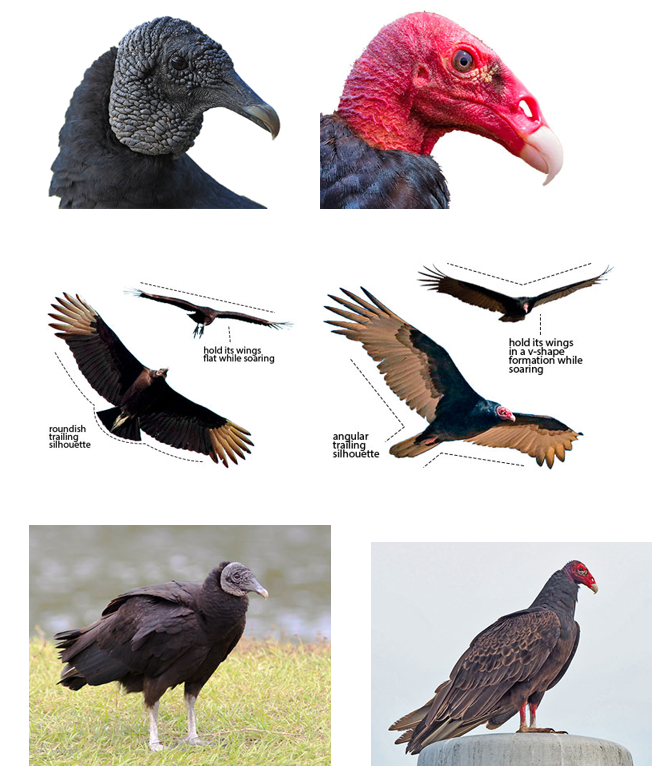
Black vultures are one of two species of vulture we have in North Carolina, the other being the turkey vulture. The most striking difference between the two is the bright red head of the turkey vulture. The smaller black vulture is known to travel in large flocks, often following turkey vultures due to their superior sense of smell.
Although these species have a role in the ecosystem, they can cause serious problems for farmers. Vultures are known for their diet of carrion, the flesh of dead animals, but they will take an opportunity to prey on vulnerable livestock species when given the chance. The most common instance is when animals are giving birth where the smell of bodily fluids attract vultures. When newborn livestock animals are attacked by vultures, the most common outcomes are death or the animal having to be put down. Vultures will often target the mother during depredation, which can cause long-lasting effects to her reproductive system and overall health. Due to the vulture’s main diet of decomposing flesh, pecking at reproductive organs can introduce a whole host of bacteria that could cause a serious infection and potentially a loss of reproductive ability. They also can be carriers of Highly Pathogenic Avian Influenza, which can be detrimental to both commercial and backyard poultry flocks.
Both vulture species are protected under the Migratory Bird Treaty Act, so they cannot be harassed, poisoned, killed, or shot at. Due to their protective status, a depredation permit must be obtained before any action can be taken against these birds. These permits are handled through the U.S. Fish & Wildlife Service, and then the North Carolina Wildlife Resources Commission will issue a state depredation permit once the federal permit is issued.
There are non-lethal strategies to help prevent conflicts with vultures and livestock. An effigy that simulates a dead vulture can be used to ward off flocks of vultures in a similar way a scarecrow is used. Do not use a dead vulture unless you have obtained a permit, but there are fake effigies available as well. Being in possession of a dead vulture, even one that you did not kill, without a permit is a violation of federal law and could result in legal penalties. Another strategy is to keep livestock in an area where they can be easily observed during calving, lambing, or kidding. Not only is this a good practice to monitor black vulture activity, but it allows producers to step in quickly in case something goes wrong.
It is generally a good idea to avoid feeding wildlife in an effort to prevent unwanted species from causing damage on your farm, or property. Along with black vultures, there are a number of different species that can cause problems (property damage, disease transmission, etc.) for livestock producers including deer, groundhogs, raccoons, and more. If you have any questions about wildlife interactions, or other livestock and forage related questions, please contact Alex Kissinger at the Orange or Durham County Extension office.