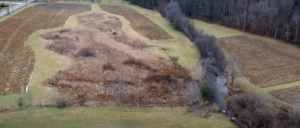
Conservation Easements: Save the Date for Three Part Series, 12:30pm September 7, 14, 21
Please join this series of webinars on September 7, 14 and 21 at 12:30 p.m. for an update on …




El inglés es el idioma de control de esta página. En la medida en que haya algún conflicto entre la traducción al inglés y la traducción, el inglés prevalece.
Al hacer clic en el enlace de traducción se activa un servicio de traducción gratuito para convertir la página al español. Al igual que con cualquier traducción por Internet, la conversión no es sensible al contexto y puede que no traduzca el texto en su significado original. NC State Extension no garantiza la exactitud del texto traducido. Por favor, tenga en cuenta que algunas aplicaciones y/o servicios pueden no funcionar como se espera cuando se traducen.
Inglês é o idioma de controle desta página. Na medida que haja algum conflito entre o texto original em Inglês e a tradução, o Inglês prevalece.
Ao clicar no link de tradução, um serviço gratuito de tradução será ativado para converter a página para o Português. Como em qualquer tradução pela internet, a conversão não é sensivel ao contexto e pode não ocorrer a tradução para o significado orginal. O serviço de Extensão da Carolina do Norte (NC State Extension) não garante a exatidão do texto traduzido. Por favor, observe que algumas funções ou serviços podem não funcionar como esperado após a tradução.
English is the controlling language of this page. To the extent there is any conflict between the English text and the translation, English controls.
Clicking on the translation link activates a free translation service to convert the page to Spanish. As with any Internet translation, the conversion is not context-sensitive and may not translate the text to its original meaning. NC State Extension does not guarantee the accuracy of the translated text. Please note that some applications and/or services may not function as expected when translated.
Collapse ▲Please join this series of webinars on September 7, 14 and 21 at 12:30 p.m. for an update on …
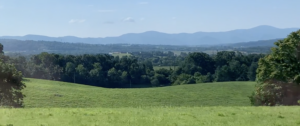
In the last week of July, members of the North Carolina Society of Farm Managers and Rural Appraisers (NCSFMRA) …
In early August we did a presentation at the Blackland Farm Managers Tour. We discussed our findings about P …
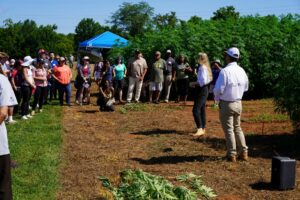
8/17/2022 – NC State University held two official field days in 2022 highlighting our hemp research. The first one …
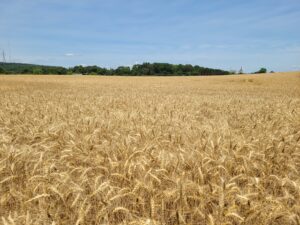
Did you know that North Carolina wheat makes great biscuits? The type of wheat grown in our state, soft …
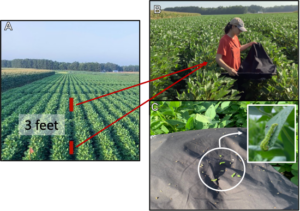
Article by Taynara Possebom, M.S. candidate, NC State University, Department of Entomology and Plant Pathology Corn earworm, also known as …
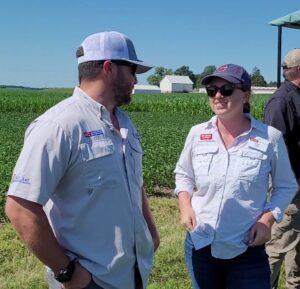
Are you a farmer interested in working with N.C. Cooperative Extension to conduct research on your farm? Listen to this …
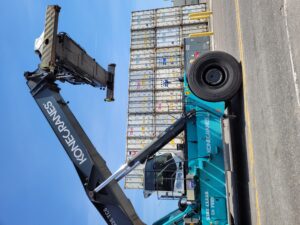
*This project is funded by the NC Small Grain Growers Association in an effort to address the declining wheat …
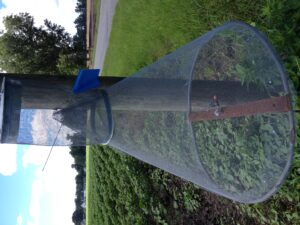
Light trap catches for corn earworm are up this week in Craven, Duplin, Scotland and Stanley county. This is …
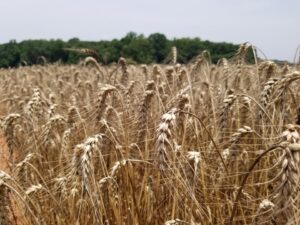
The 2022 NC OVT wheat, barley, and oats variety data are now available on the NC OVT website and …
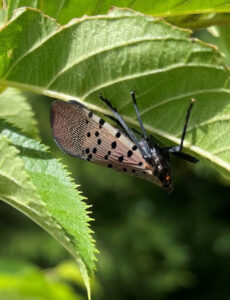
The short answer: We do not anticipate that spotted lanternfly will be an issue for field crops The long answer: …
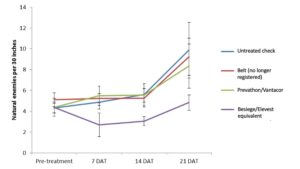
It is important not to use insecticides in soybeans before thresholds are reached (including at bloom for corn earworm …
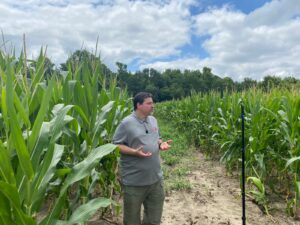
In this video, Luke Gatiboni, the extension soil fertility specialist at the Department of Crop and Soil Sciences, gives …
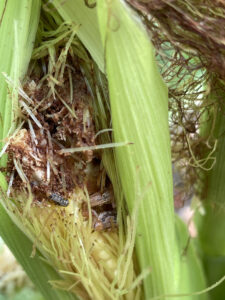
Corn earworm (aka bollworm, podworm, tomato fruitworm) populations are much higher in corn than usual. Corn is a nursery …
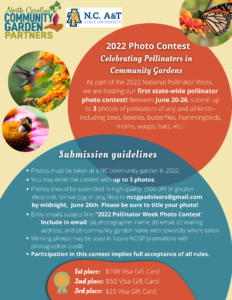
Thank you to everyone that participated in the “Hatch Butterflies” program when 4-H Embryology took a break due to …
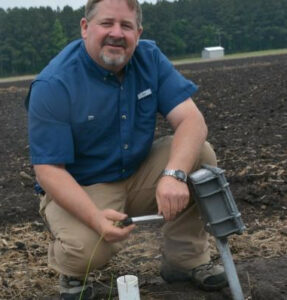
Water management is important. To help farmers in North Carolina, Chad Poole, Assistant Professor and Extension Specialist is looking …
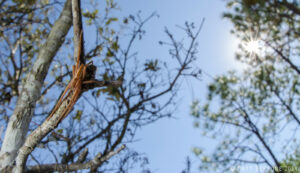
We’ve been getting a lot of inquiries about spiders hanging around and coming inside homes lately. Some have …

With corn shooting up, some fields are not too far away from tasseling. It is critical to scout all …
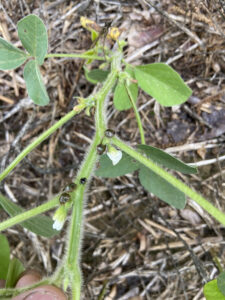
A few reports are trickling in of kudzu bugs in soybeans as they usually do this time of year. …
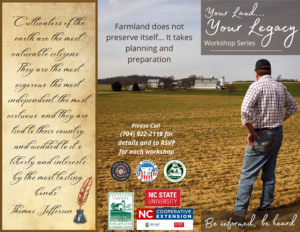
Gaston County Cooperative Extension wrapped up its three part Your Land Your Legacy workshop series on Friday, April 22. The …
Vineyard establishment involves careful planning, thorough site preparation, vineyard design, planting, and trellis construction. Unlike …
Growing Chardonnay grapes, the number one vinifera variety grown in North Carolina, can be a …
New and current grape growers will find practical information on site appraisal, establishment, and operation …
This chapter discusses the principles of grapevine dormant pruning, reviews reasons for vine training, and …
High-quality wines — those that command premium prices — can be produced only from high-quality …

Grapes grown in North Carolina are sometimes exposed to unfavorable climatic conditions and biological pests …
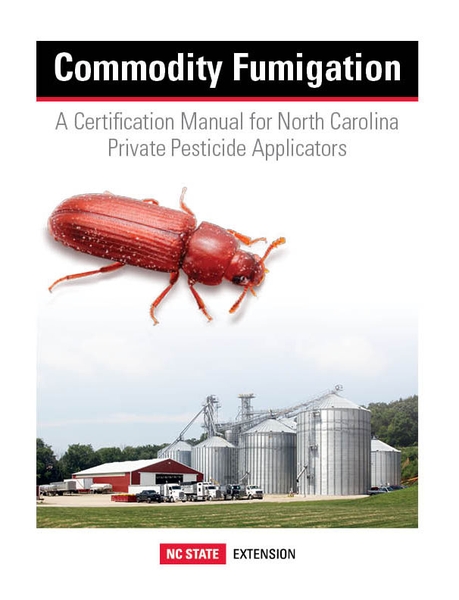
This manual provides guidance tailored for North Carolina's non-commercial pesticide applicators using fumigants in commodity …
Grapevines require 16 essential nutrients for normal growth and development (Table 9.1). Carbon, hydrogen, and …